There are good reasons to buy bitcoin with cash. Some people have no bank account – newcomers whose Swiss account is not yet open, for example. Others would rather keep their bank out of it, or just want to try CHF 50 without opening an account with an ID selfie. And some simply prefer paying in cash. Switzerland is better equipped for this than most countries: post office counters, ticket machines, crypto ATMs, retailers and exchange offices all take banknotes. The differences lie in the cost, and they are substantial.
This page compares every cash route we could verify, works out the cost on CHF 500 and explains the legal threshold above which every provider has to see your ID.
Turning cash into bitcoin: the options at a glance
| Where | Cost on CHF 500 | Without ID up to | |
|---|---|---|---|
| QR-bill at a post office | any Swiss Post branch | CHF 0–6.50 plus any Swiss Post fee | CHF 999 / 30 days |
| QR-bill at an SBB machine | railway stations | CHF 5–11.50 | CHF 999 / 30 days |
| SBB paper wallet | railway stations | not published | CHF 1,000 cash / 30 days |
| Crypto ATM (Värdex) | 80+ locations | about CHF 59 | CHF 1,000 cash / 30 days |
| Kiosk voucher (Cryptonow) | retail, online | CHF 35.50 (2021 test) | not confirmed |
| Exchange office (Rex Change) | Geneva | CHF 30 | under CHF 1,000 / 30 days |
For comparison: with a bank account, buying CHF 500 of bitcoin by transfer through an exchange or app typically costs between just over one franc and seven francs. The calculator at the top of this page shows these ranges for each payment method; at ATMs, Värdex’s own figures suggest costs can even exceed the range shown there.
The post office: the cheapest cash route
The least glamorous route is also the cheapest. Geneva-based Mt Pelerin, a member of the self-regulatory organisation SO-FIT, generates a Swiss QR payment slip in its Bridge Wallet app. You pay it in cash at a Swiss Post counter like any other bill.
-
Set up the app
Install Bridge Wallet, create a new wallet and register with an email address and signature-based authentication.
-
Choose the coin
Select the cryptocurrency and network, then «Add», and in the «Bank» tab choose Swiss francs. Your own wallet address is pre-filled as the recipient.
-
Create the QR-bill
Tap «Swiss QR bill». The app produces a PDF for you to print.
-
Pay in cash
Pay the bill in cash at any Swiss Post counter or, where available, at a payment machine.
-
Receive the coins
According to Mt Pelerin, payments are processed within 24 business hours. Two emails confirm receipt of the payment and dispatch of the coins.
Mt Pelerin charges 0 to 1.3% depending on annual volume and shows an all-inclusive rate. Without identity verification you can buy CHF 999 per 30 days and CHF 11,988 per year. Mt Pelerin does not say whether Swiss Post charges for paying at the counter, and we could not confirm it – ask at the counter. Besides bitcoin, about 30 other coins are available, including ether, USDT and the franc A token whose value is pegged to a currency such as the Swiss franc or the US dollar. ZCHF. According to Mt Pelerin, the service is not intended for residents of the EU or the UK, so it only works once you live in Switzerland. The coins land directly in your own wallet, with no paper in between. Our full assessment is in the Mt Pelerin review.
SBB ticket machines: two routes at the station
SBB ticket machines offer bitcoin in two ways. Under «Crypto Paper Wallet» you buy bitcoin or ether for CHF 20 to 500, in cash or with a PostFinance Card or Maestro; you need a Swiss mobile number. The operator, SweePay AG, publishes no fee, and in cash you can spend at most CHF 500 per day and CHF 1,000 per 30 days. Alternatively, scan a Mt Pelerin QR-bill there and pay it with franc or euro notes; the machine adds 1.25%, at least CHF 2.50 and at most CHF 5, up to CHF 600 per bill. The steps, limits and how to redeem the paper wallet are on buying bitcoin at an SBB ticket machine.
Crypto ATMs: instant, but expensive
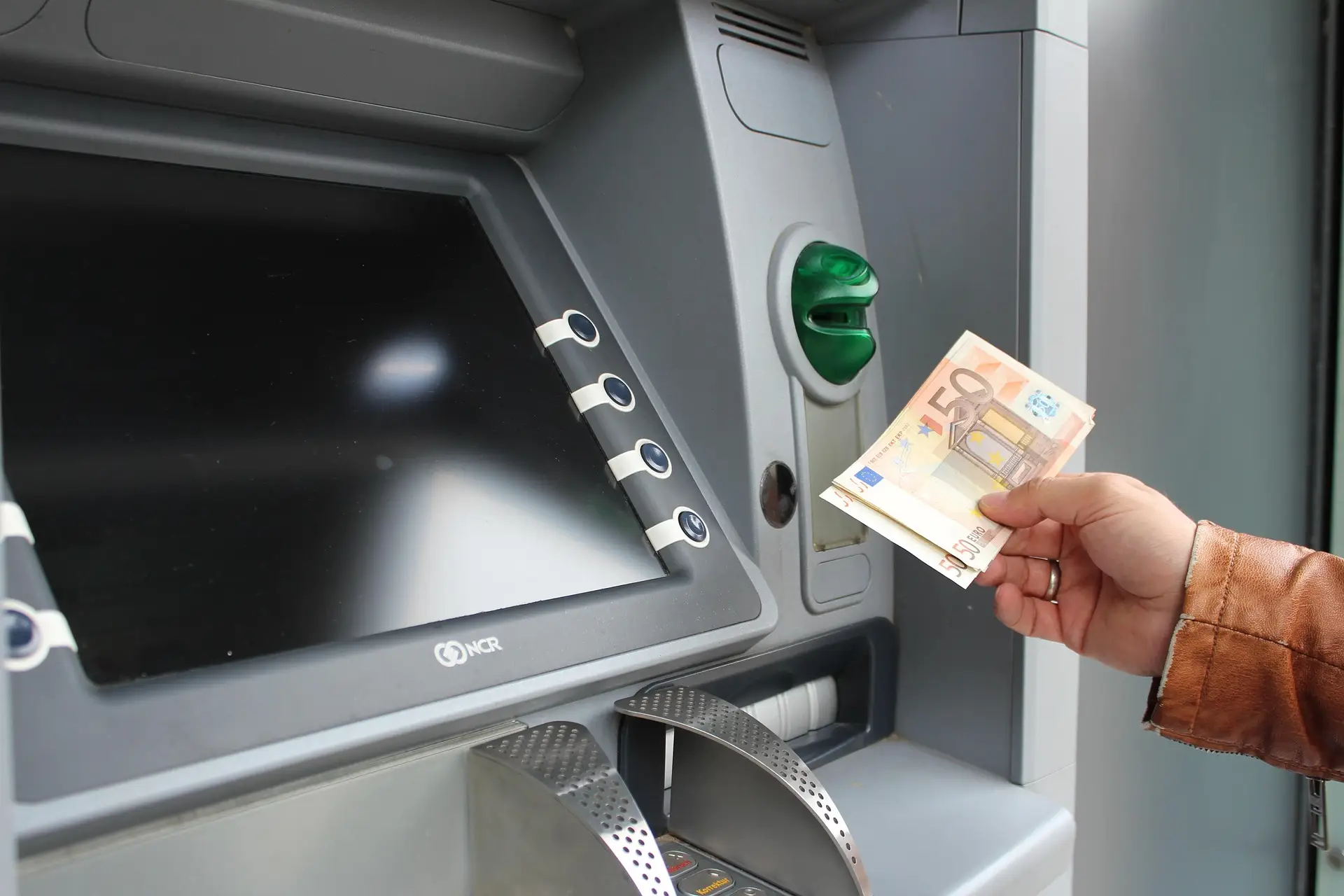
Coin ATM Radar last listed about 130 crypto ATMs in Switzerland, and the largest network belongs to Värdex, with more than 80 machines. You buy bitcoin or ether from CHF 50, in franc or euro cash, and receive a A sheet of paper with a receiving address and private key. Whoever holds the paper holds the coins.. Värdex’s help centre lists a fixed fee of CHF 4 and a commission of 11%, depending on the location. In return, the coins are available immediately and Värdex also buys bitcoin back. Locations by city, the process and scam warnings: bitcoin ATMs in Switzerland.
Bitcoin vouchers from the kiosk
The idea is simple: buy a card at the till, load it with cash and convert it into bitcoin online later. In Switzerland, the Cryptonow brand sells such cards, distributed through Värdex’s platform. According to a test by finanzdepot.ch, they arrived at Manor in March 2021, then from April 2021 at Valora kiosks such as k kiosk, at avec shops and at Shell, BP and Avia petrol-station shops. In late 2023, finews reported sales in around 160 Coop branches, with bitcoin and ether cards from CHF 50 to 500.
How it worked in the 2021 test: at the till you load between CHF 50 and 500. Online, you enter the card’s wallet ID, a scratch-off PIN and your mobile number, then confirm with an SMS code. The card itself acts as a paper wallet, with the A long string of characters that lets you spend coins. Anyone who knows it can empty the balance. under the scratch panel. The cost in the test: a CHF 1 activation fee plus a 6.9% commission, which the author counted among the most expensive offers. You cannot sell the bitcoin back through Cryptonow.
What applies today we could not check. When we accessed Cryptonow’s website from outside Switzerland, it only showed a notice that the service was not available in our region, so current prices, denominations and points of sale remain open. According to secondary sources, online resellers also sell the vouchers, some with TWINT as a payment method – more on that in buying crypto with TWINT. Ask for the total price in the shop and check it against the market rate before you pay.
Exchange offices: cash at the counter, including larger sums
If you want face-to-face advice or to exchange more than a few hundred francs, Geneva has an exception. Rex Change, at Rue de Berne 29bis a few minutes from Cornavin station, buys and sells about a dozen cryptocurrencies for cash according to its website, including bitcoin, ether, USDT, Solana and ZCHF. The commission falls with volume: 6% below CHF 1,000, 5% up to CHF 9,999, 4% up to CHF 24,999 and down to 2.5% from CHF 100,000. From CHF 1,000 within 30 days you need valid ID, and coins only go to a personal wallet that is verified on site. Rex Change is affiliated with the self-regulatory organisation ARIF. More on what Geneva offers: crypto in Geneva.
Värdex also runs OTC Exchange Points at third-party counters, where, depending on the location, CHF 20,000 to 50,000 per day is possible, in cash or by debit card in francs or euros – but only with ID, proof of address and, where applicable, a permit. Each counter sets its own commission.
Why cash is so expensive
Cash costs providers money. Machines have to be bought, maintained, insured and emptied regularly; sites in hotels, shops and stations come with rent; every transaction needs anti-money-laundering checks. Värdex justifies its fees in exactly these terms: higher costs for maintenance, operations, security and compliance than online services. On top of that, cash purchases are small, so fixed costs are spread over few francs.
Buying on an exchange removes all that. The price is a The gap between the price you pay and the market price – a fee, even if it is not called one. of fractions of a per cent plus a stated fee. That does not make cash unreasonable: for a CHF 50 trial, a few francs extra is fair enough. But if you invest CHF 500 a month, you lose about CHF 700 a year at an ATM, compared with perhaps CHF 60 online. For regular purchases, the online routes are compared in buying crypto by bank transfer.
Investing regularly rather than trying once? With an account and a bank transfer, the cash surcharges disappear.
Operating since 2013Group registered with FinCEN (US) and the FCA (UK)
Buying without KYC: what is legal and what is not
The basis is FINMA’s anti-money-laundering ordinance (AMLO-FINMA, Art. 51a). Since 2021, financial intermediaries must identify customers once exchange transactions in virtual currencies reach CHF 1,000. Before that the threshold was CHF 5,000, which still applies to ordinary currency exchange. Linked purchases are added up over 30 days, and since 1 December 2022 providers must track small amounts too. Without Know Your Customer: the provider verifies your identity, usually with an ID document and a selfie, before you can buy., you can therefore buy at most just under CHF 1,000 a month, with extra daily or yearly caps depending on the provider.
Deliberately spreading purchases across days, providers or people to stay under the limit is risky ground. Providers have to spot such patterns; they can end the business relationship and, where there is reasonable suspicion, inform the Money Laundering Reporting Office Switzerland (MROS).
And «no ID» does not mean «anonymous». Almost every cash route requires a phone number or email address, Swiss SIM cards are registered to a person, and machines and counters are often under CCTV. Every bitcoin transaction also stays public on the blockchain for good. Cash changes nothing for tax either: coins go on your tax return at their year-end value, however you bought them – see crypto tax in Switzerland.
- Compare the rate offered with the market price before paying.
- Treat paper wallets and voucher cards like cash: whoever has the key has the coins.
- Move the coins to your own wallet promptly instead of leaving them on thermal paper.
- Keep receipts – for queries to the provider and as proof of purchase.
- Never pay cash into a machine because someone on the phone tells you to.
That last point is one of the most common scams in Switzerland. How it works is explained in crypto scams.
Paying with euros
For cross-border commuters, tourists or anyone with leftover euros, there are two confirmed routes. Värdex ATMs accept euro notes, as do Värdex’s OTC Exchange Points. And a Mt Pelerin QR-bill can be paid with euro notes at an SBB machine; because the bill is in francs, the machine converts at its own rate. For SBB paper wallets, SBB does not specify the currency. Remember that converting euros into francs adds a second exchange rate.
No bank account – and the way back
Buying without a bank account works fine with cash, as long as the amounts stay small. Peer-to-peer marketplaces also work without an exchange account: on Peach Bitcoin, a Neuchâtel company affiliated with PolyReg, the buyer pays the seller directly, for example via TWINT, while Peach holds the seller’s bitcoin in escrow; the platform charges 2% of the amount released. TWINT, however, usually requires a bank account.
Getting back to cash is harder. We could confirm two routes: Värdex ATMs buy bitcoin and pay out in CHF 100 notes, and Rex Change in Geneva exchanges crypto for cash at the same commission rates as for buying, according to its fee table. Everything else goes through a bank account. The full picture: cashing out crypto in Switzerland.