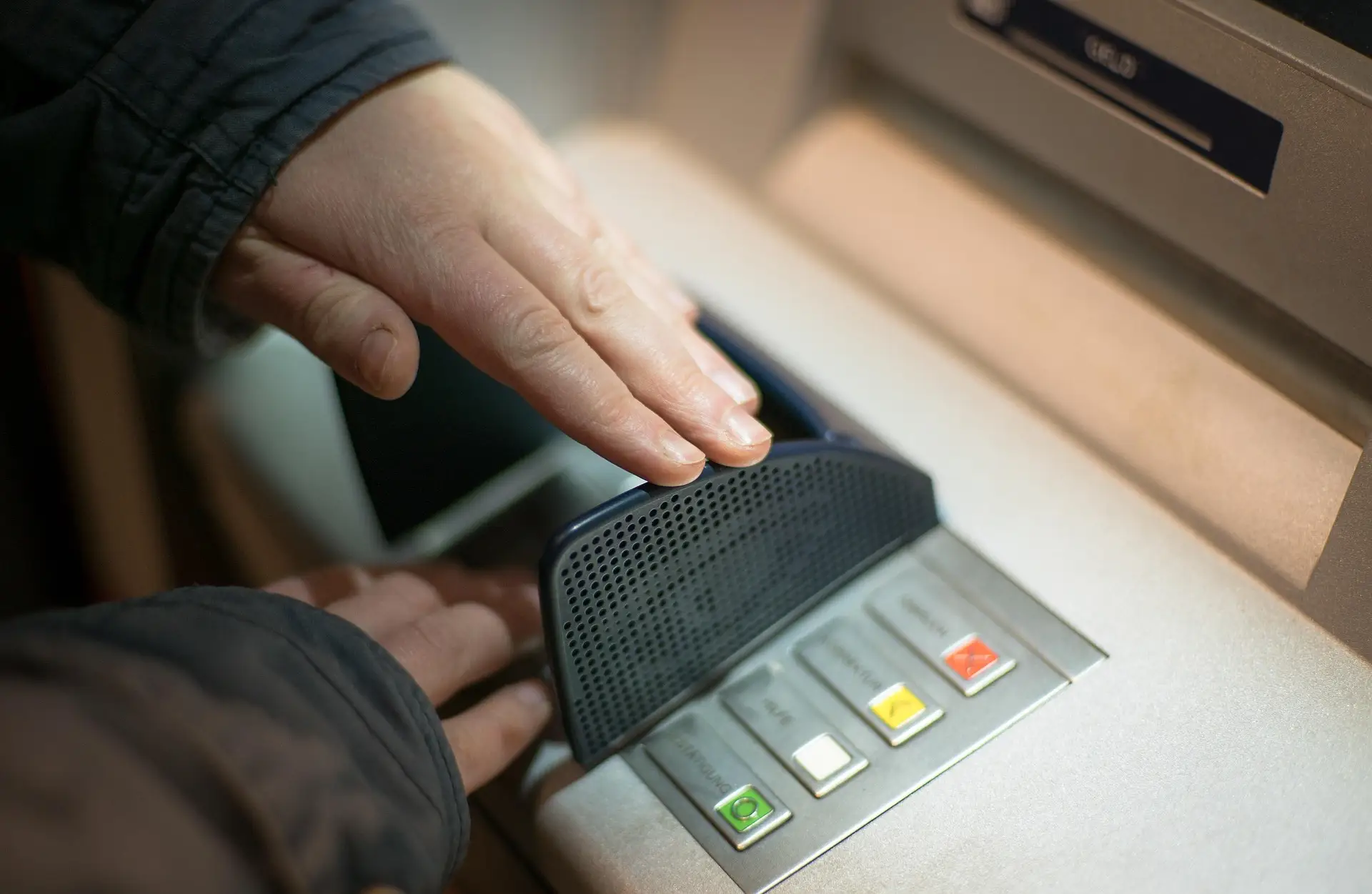
If you live in Switzerland, want an international crypto exchange and want to pay in francs, sooner or later you end up at Kraken. The reason is simple: since December 2019, the exchange – founded in 2011 – has accepted francs through Liechtenstein’s Bank Frick, and SIC transfers are free. Add a proper order book with bitcoin and ether against francs, several hundred coins and Pi Network, which no Swiss provider offers. For people who place their own orders and later move coins to their own wallet, Kraken is one of the cheapest options around.
It suits you less if you want Swiss supervision, a tax statement or a quick card purchase. Your contract is with a company in the British Virgin Islands, card deposits aren’t available in francs, and if you use the simple app rather than Kraken Pro you pay several times more in fees. This review sets out the numbers and the catches.
Depositing francs: Kraken’s strongest point
Kraken offers two routes for francs, both via Bank Frick in Balzers. Swiss Interbank Clearing: the Swiss banks’ payment system for franc transfers, operated by SIX on behalf of the Swiss National Bank. transfers are, according to Kraken, only for customers resident in Switzerland and Liechtenstein: minimum CHF 1, no fee, processed the same day. The SWIFT option is open worldwide, costs CHF 0.75 and takes one to five business days. If you live in Switzerland, there is no reason to choose SWIFT.
Euros are deposited by SEPA, also free, through several payment providers. That is handy if you already hold euros, for example in an account from a previous job elsewhere in Europe. Debit-card deposits, however, are only listed for EUR, USD, GBP, CAD and AUD – not francs. The euro option costs 3.75% plus EUR 0.25 and, according to the support page, is meant for the EEA. There is no TWINT, no PostFinance Pay and no Apple Pay in francs.
To move francs back to your bank, SIC costs CHF 1 (minimum CHF 2) and SWIFT also CHF 1, but only from CHF 100. Euro withdrawals by SEPA usually cost EUR 1. Kraken notes that these figures can change; the funding page in your account is what counts. How transfers to crypto platforms work and what your bank looks out for is covered in buying crypto by bank transfer; for the way back, see cashing out crypto in Switzerland.
Worked example: CHF 1,000 of bitcoin
Based on Kraken’s published fee schedule and deposit table. Kraken does not publish its The gap between the best buying and selling price. You pay it indirectly on every trade, even when no fee is shown.; it comes on top in each case.
Route 1 – SIC and Kraken Pro: depositing CHF 1,000 costs nothing. You buy on the BTC/CHF pair. With a market order you pay 0.80% as a A taker buys immediately at the best available price, removing liquidity from the order book; a maker places a limit order and usually pays less., or CHF 8. With a limit order as a maker, 0.40% or CHF 4. Total: CHF 4 to CHF 8.
Route 2 – SIC and the simple Kraken app: an instant buy costs 1% according to Kraken (1% for recurring buys too, 1.5% for custom orders). That is CHF 10 to CHF 15, plus spread.
Route 3 – card: not possible in francs. If your account offers the euro card option, you would add 3.75% plus EUR 0.25 for the deposit – about CHF 37.75 – then the 1% trading fee and any foreign-currency fee from your card. Just over CHF 48 instead of CHF 4 to 8.
Bottom line: on Kraken, deposit via SIC and trade in Kraken Pro. If you buy CHF 1,000 a month, that means CHF 48 a year (limit orders in Pro) instead of CHF 120 (recurring buy in the app), spread excluded.
Fees: Kraken Pro versus the app
Kraken offers two interfaces on the same account. The simple app shows you a purchase price with the spread built in. Kraken Pro is the exchange view, with an The list of all open buy and sell orders at different prices; it is what sets the current market price., limit orders and volume discounts. At the entry tier you pay 0.40% as a maker and 0.80% as a taker; from USD 2,500 of 30-day volume the rates fall to 0.30% and 0.60%, and from USD 10,000 to 0.22% and 0.38%. Stablecoin and currency pairs such as EUR/CHF have their own schedule, starting at 0.20%.
How it compares with other providers people use in Switzerland:
| Kraken | CEX.IO | Swissquote | SwissBorg | |
|---|---|---|---|---|
| Deposit CHF | SIC free, from CHF 1 | not possible | Swiss IBAN | SWIFT only |
| Withdraw CHF | SIC CHF 1 | no CHF; SEPA EUR 2.99 | bank account | 0.10%, max CHF 110 |
| Entry trading fee | Pro 0.40% / 0.80% | 0.15% / 0.25% | 1.00% | 0.99% |
| Card purchase | not in CHF | Visa, Mastercard, Apple Pay | not found | 4.5% for CH |
| Staking commission | 25–30% | CH listed, terms in account | 20% | not confirmed |
So Kraken isn’t the cheapest exchange per trade, but it is the most economical once you count franc deposits and withdrawals. If card purchases or an even wider altcoin range matter more to you, our CEX.IO review covers an alternative with lower spot fees, but no francs.
Regulation: who you are contracting with
The Kraken group holds licences in several countries. In the EEA it operates through Payward Europe Solutions Ltd, authorised under MiCA by the Central Bank of Ireland since June 2025 (ESMA register). In the UK, Payward Ltd is registered with the FCA; in the US, Payward Interactive, Inc. is registered with FinCEN.
None of these covers Switzerland. Under the global terms, customers “anywhere else in the world”, except Canada, are served by Payward Trading Ltd in the British Virgin Islands. Switzerland is not named, but it is neither in the EEA nor among the other markets listed. Kraken mentions no FINMA licence and no membership of a Swiss self-regulatory organisation.
What does that mean for you? Your coins sit with a foreign company to which neither FINMA supervision nor Swiss bankruptcy law – which lets clients reclaim crypto held for them – applies. Kraken has been operating since 2011 and is one of the established names; the rule still holds that larger holdings belong in your own wallet, see crypto wallets in Switzerland. The difference between a bank, an SRO member and a foreign exchange is explained in FINMA and crypto regulation.
Coins, franc pairs and Pi
Kraken lists several hundred coins. According to Kraken’s public pair list, only a few trade directly against francs: BTC/CHF, ETH/CHF, USDC/CHF and USDT/CHF, plus the currency pairs EUR/CHF and USD/CHF and the franc stablecoin ZCHF. Everything else you buy against euros or dollars. The usual route: deposit francs via SIC, convert on EUR/CHF, then buy the coin against euros. We could not confirm whether USDT is tradable for Swiss accounts; in the EEA, Kraken restricted it because of MiCA.
Pi Network is a special case: Kraken trades it against euros and dollars and is on Pi’s list of verified exchanges. None of the Swiss providers we checked offers it. What to know before buying: Pi coin in Switzerland.
For large amounts, Kraken’s OTC desk handles trades from USD 50,000. Kraken also promotes its card on the Swiss website; we could not confirm that it is available to Swiss residents.
Staking and Earn
Kraken offers bonded staking, flexible staking and “Auto Earn”. The commission is substantial: for flexible staking and Auto Earn, Kraken keeps 30% of rewards; for bonded staking, 25% on balances up to USD 1 million. Swissquote and PostFinance take 20%. Which coins Swiss customers can stake is set by country; we found no definitive list for Switzerland. Rewards are taxable as income. More in crypto staking in Switzerland.
Taxes
We could not confirm a Swiss tax statement from Kraken. You receive account statements and history exports and declare your 31 December balance yourself, valued with the ESTV price list. Staking rewards go in as income at their franc value on the day they are credited. If you have moved to Switzerland recently, note that the cantons ask about all your crypto holdings, wherever they are held. The form itself is covered in declaring crypto on your tax return.
What works
- CHF deposits via SIC through Bank Frick: free, from CHF 1, same day
- Order book with BTC/CHF, ETH/CHF, USDC/CHF and the EUR/CHF currency pair
- Kraken Pro from 0.40% (maker) and 0.80% (taker), lower from USD 2,500 of 30-day volume
- Pi Network tradable (PI/EUR, PI/USD)
Watch out for
- Swiss contracting party: Payward Trading Ltd, British Virgin Islands
- No card deposits in CHF; euro card deposits cost 3.75% plus EUR 0.25
- Simple app: 1–1.5% fee plus spread
- Staking: 30% commission on flexible staking and Auto Earn
- No Swiss tax statement confirmed
Opening an account from Switzerland
To deposit francs you need a fully verified account level. Kraken typically asks for a valid ID, a selfie, proof of residence (a utility bill, bank statement or your commune’s residence certificate), your occupation and a phone number. Expats can use their passport; your Swiss address is what matters for residence. For larger sums, Kraken asks about the source of funds, so keep salary statements, sale contracts or bank statements to hand. This check, called Know Your Customer: the legally required identity check before a provider moves money or crypto for you., is mandatory on any reputable exchange.
-
Create the account
Sign up at kraken.com/ch, choose Switzerland as your country of residence and switch on two-factor authentication straight away.
-
Get verified
Upload your ID and selfie, then add proof of residence and occupation. Franc deposits are only unlocked after that.
-
Send francs via SIC
Under Deposit, choose CHF and then SIC (Bank Frick). Copy the IBAN and reference exactly and pay from an account in your own name.
-
Buy in Kraken Pro
Pick BTC/CHF or ETH/CHF and place a limit order. For other coins, convert on EUR/CHF first, then buy against euros.
-
Secure your coins
Send larger holdings to your own wallet, double-check the address and save statements for your tax return.
Want to try an alternative with card purchases, Apple Pay and a wide range of coins? There you fund in euros rather than francs.
Operating since 2013Group registered with FinCEN (US) and the FCA (UK)
Alternatives to Kraken
If you want your coins held by a Swiss bank, Swissquote offers 55 cryptocurrencies under FINMA supervision, but charges 1% per trade. The SwissBorg app offers around 400 coins but only accepts francs by SWIFT. If you only want bitcoin, a specialised app such as Relai, with a savings plan, keeps things simple.