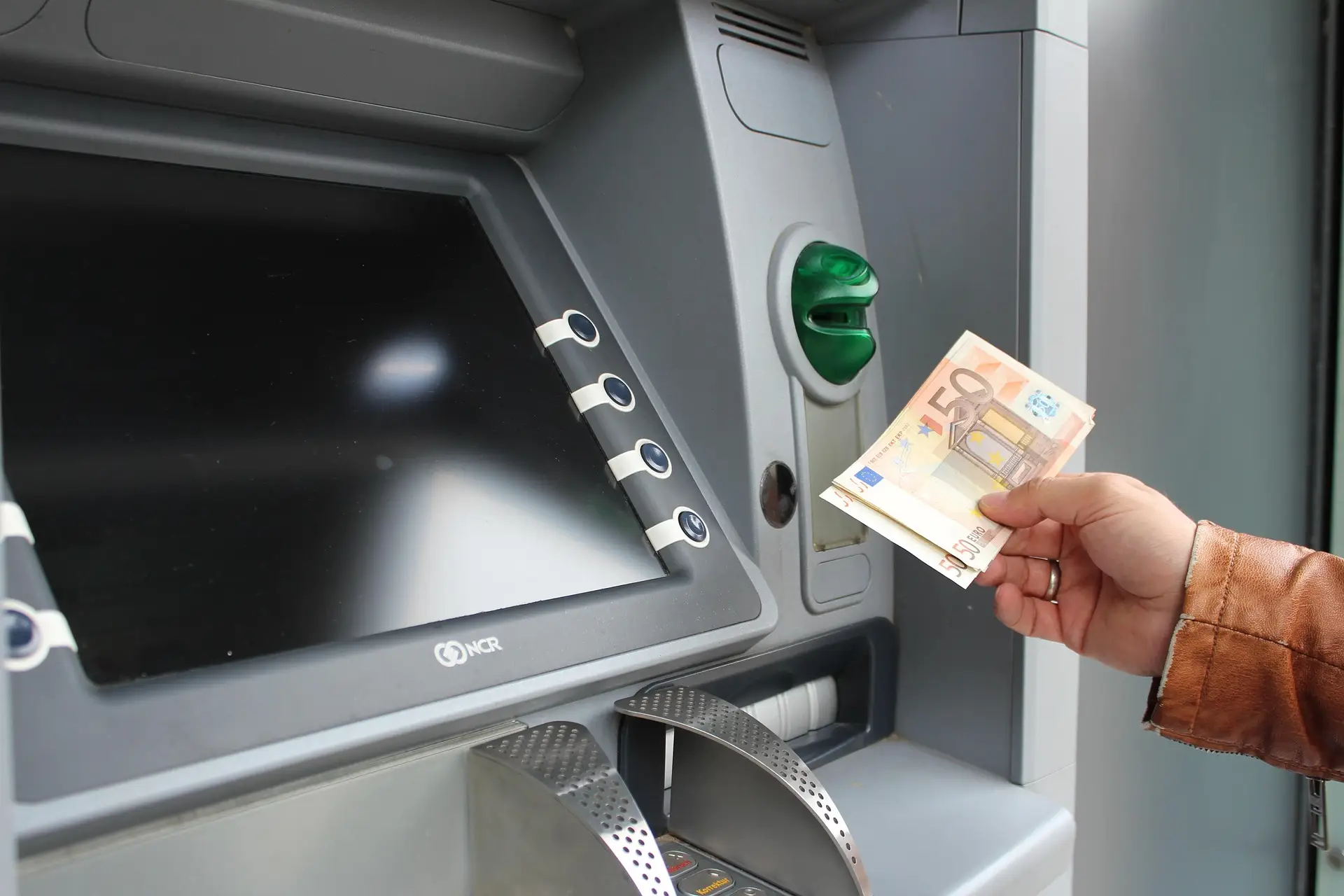
Swiss Federal Railways (SBB) has sold bitcoin through its ticket machines since November 2016, and the idea has barely changed since: you pick an amount between CHF 20 and 500, pay in cash or by card, and the machine prints a slip of paper that holds your coins. The service is not run by SBB itself but by SweePay AG in Zug, a financial intermediary and member of the self-regulatory organisation PolyReg. SBB simply provides the machines.
What the screen does not tell you is how much you pay for the convenience. This page walks through the purchase, does the maths on the cost and explains what to do with the printout – because the real work starts once the paper is in your hand.
How to buy bitcoin at an SBB ticket machine
The purchase takes about two minutes and, according to SBB, works at every SBB ticket machine around the clock, from the concourse at Zurich HB to a small country station. We have not checked machines run by other railways. You need a phone with a Swiss number and either banknotes, a PostFinance Card or a Maestro card. If you have just moved to Switzerland and still use a foreign SIM, this route is closed to you for now.
-
Open the menu
On the start screen, tap «Prepaid / Money transfers», then «Crypto Paper Wallet». The machine can be switched to English.
-
Choose the coin and amount
Select Bitcoin or Ethereum, enter an amount between CHF 20 and 500 and confirm.
-
Enter your mobile number
The number must belong to a Swiss mobile operator. A security code (mTAN) arrives by SMS.
-
Enter the code and check the offer
After the mTAN, the screen shows how much bitcoin or ether you will get. This is the moment to compare it with the market price – once paid, the purchase is final.
-
Pay
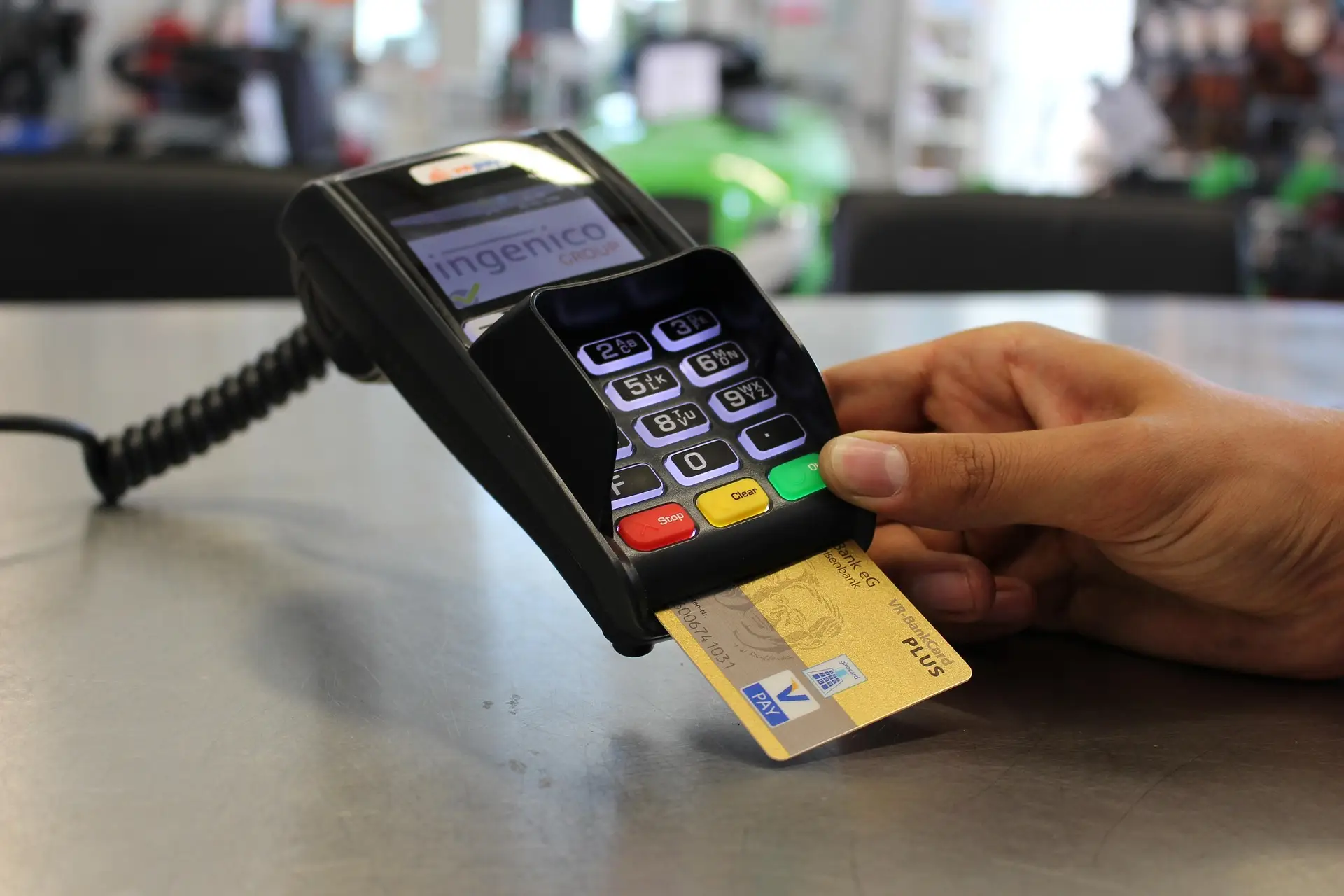
In cash, with the PostFinance Card or with Maestro. Cash is capped at CHF 500 per day; by card up to CHF 1,000 per day is possible.
-
Take the paper wallet
The machine prints the paper wallet. Put it away at once, do not photograph it and do not leave it lying around.
SBB does not describe exactly what is printed. A A sheet of paper with a receiving address and the matching private key. Whoever holds the paper holds the coins. usually contains two things: the public address where the coins sit and the A long string of characters that lets you spend coins. Anyone who knows it can empty the balance – it is password and safe key in one., both often also as QR codes. Under the terms of use, the coins are yours as soon as the paper is printed; you can keep it or transfer the full balance to another wallet. Refunds and exchanges are excluded.
Limits: how much you can buy
The limits are not on SBB’s product page but in SweePay’s terms of use for crypto paper wallets, available in German only. They are tighter than the CHF 500 per purchase suggests:
| Limit | |
|---|---|
| Per purchase | CHF 20 to 500 |
| Cash per day | max. CHF 500 |
| Bank card per day | max. CHF 1,000 |
| Total per day, any payment method | max. CHF 1,000 |
| Cash within 30 days | max. CHF 1,000 |
| Minimum age | 18 |
The cash limit comes from FINMA’s anti-money-laundering ordinance. Since 2021, financial intermediaries must identify their customers once crypto exchange transactions reach CHF 1,000, and linked purchases are added up over 30 days. To sell without checking ID, a provider has to stay below that line. Your mobile number is the thread that lets SweePay add up your purchases. SweePay also reserves the right to block access at its own discretion and without notice. How Swiss crypto supervision works in general is covered on our page about FINMA crypto regulation.
None of this makes the purchase anonymous. Swiss SIM cards, prepaid ones included, are only registered against ID, and stations are covered by CCTV. The accurate statement is narrower: you need no account and no copy of your passport or residence permit.
What does bitcoin at an SBB machine cost?
This is the awkward part. SBB’s product page lists no fee, only the note that prices and the offer may change. The terms state that SweePay charges an exchange rate plus an exchange fee, which you accept before buying, and that all prices are final. SweePay publishes no percentage anywhere. The fee is therefore hidden in the The gap between the market price and the price you actually pay. It is a fee that is not labelled as one. – you only see it if you do the maths.
There is one number in circulation, and it comes from a competitor: in a post on its own blog, Mt Pelerin says the SBB paper wallet costs «at least 6%» and up to 14% depending on the amount. That is a rival’s claim and we could not verify it independently. As a rough order of magnitude it is still useful, because it matches what cash-based crypto machines in Switzerland generally cost.
On top of the machine’s cost comes the A fee paid to the Bitcoin or Ethereum network to process a transaction. It depends on how busy the network is, not on the amount sent. when you later move the balance to your own wallet. For bitcoin that is a few cents when the network is quiet and considerably more when it is busy. On a CHF 20 paper wallet it can make a real dent.
Redeeming the paper wallet: moving the coins to your own wallet
There is nothing to «redeem» in the sense of a voucher code. The coins are already on the blockchain, at the address on your slip. What you need to do is use the private key to move the balance to an address you control. This is called a A wallet app reads someone else’s private key and transfers the whole balance to an address of your own..
Bitcoin: you need a wallet app with a sweep function. In the Electrum desktop wallet it sits under «Wallet → Private Keys → Sweep»: scan or type the private key, the destination field already shows an address in your wallet, choose the network fee and send. Note the difference between sweeping and importing. Importing leaves the paper’s key stored in the app, so the coins depend on a key that also exists on paper. Sweeping moves them to an address secured by your own recovery phrase, which makes it the cleaner option.
Ether: many Ethereum wallets have no sweep function but offer «Import account» with a private key – MetaMask, for example. You then send the full balance to your main account in the same wallet. The network fee is deducted in ether from the balance.
Always move the full balance, as SweePay’s terms also suggest. After that the paper wallet is empty and the slip is worthless. Which wallet suits you – mobile app, desktop or hardware device – is compared in our guide to crypto wallets in Switzerland.
How safe is a paper wallet?
A paper wallet is as safe as the place you keep it. It is never online, as long as nobody types in or photographs the key – that is its strength. Its weaknesses are mundane: paper gets lost, wet or faded. Machine printouts are often on thermal paper, which becomes illegible over time; SweePay’s terms explicitly recommend making a photocopy where nobody can see.
- Put the paper wallet away immediately; do not leave it on the machine or loose in your wallet.
- No photos of the private key – cloud backups of phone photos are a well-known way in.
- Make a copy and keep it apart from the original until you have moved the balance.
- For long-term storage, sweep into your own wallet rather than trusting fading thermal paper.
- Never type the private key into an app someone recommends to you by phone or chat.
- No genuine bank, police officer or support desk will ever ask for a photo of your paper wallet.
The last point is not theoretical. Fraudsters send victims to machines, have them pay in cash and then ask for a photo of the printout. If that happens to you, stop and contact the police. The common schemes are described on our page about crypto scams in Switzerland.
Selling? Not at an SBB machine
The ticket machine is a one-way street: it sells bitcoin and ether but buys nothing back. If you want francs later, you have two options. Send the coins to an exchange and withdraw the proceeds to your bank account, or use a crypto ATM that buys. Värdex pays out bitcoin sales at its machines in CHF 100 notes; according to its website it does not buy ether. The options in detail: cashing out crypto in Switzerland.
Alternatives at the same machine and elsewhere
There is a second, lesser-known crypto route through the same ticket machine. Geneva-based Mt Pelerin creates a QR-bill in its Bridge Wallet app, which you scan at the machine under «Prepaid / Money transfers» and then «Pay» (not «Crypto Paper Wallet»), and settle with franc or euro notes. The coins go straight to your own wallet, with no printout. According to Mt Pelerin, the machine adds a processing fee of 1.25%, at least CHF 2.50 and at most CHF 5, with a maximum of CHF 600 per QR-bill. Mt Pelerin itself charges 0 to 1.3% depending on annual volume. Without identity verification you can spend CHF 999 per 30 days. The coins do not arrive instantly, usually on the next business day. The same QR-bill can also be paid in cash at a Swiss Post counter – see our Mt Pelerin review.
| SBB paper wallet | QR-bill at an SBB machine | Värdex ATM | |
|---|---|---|---|
| Amount | CHF 20–500 | up to CHF 600 per bill | from CHF 50 |
| Coins | BTC, ETH | BTC and about 30 others | BTC, ETH |
| Cost | not published | 1.25% (max. CHF 5) plus 0–1.3% | 11% plus CHF 4 (help centre) |
| Coins end up | on paper | in your Bridge Wallet | on paper |
| Selling possible |
For more than a few hundred francs, none of these routes is ideal. If you have a Swiss bank account, buying online by bank transfer usually costs a fraction; the steps are on our page on buying bitcoin in Switzerland. All cash routes, including kiosk vouchers and exchange offices, are compared in buying bitcoin with cash, and crypto ATMs with their locations in bitcoin ATMs in Switzerland.
Larger amounts, lower costs: online, you buy with ID and a bank transfer instead of banknotes at the station.
Operating since 2013Group registered with FinCEN (US) and the FCA (UK)
From pilot to permanent service
A look back shows how little the basic idea has changed:
- 2016
From 11 November, SweePay AG sells bitcoin through more than 1,000 SBB ticket machines, up to CHF 500 per transaction. Customers identify themselves with a mobile number. Paying for train tickets in bitcoin is not possible.
- 2018
After the pilot, SBB makes the service permanent in November. According to Netzwoche, about 6,000 customers use it, around 3,000 of them regularly, at some 2,300 machines.
- 2025
SweePay updates its terms from 1 June: CHF 500 in cash per day, CHF 1,000 in total per day, CHF 1,000 in cash per 30 days.
- Today
Bitcoin and ether as paper wallets for CHF 20 to 500 at all SBB ticket machines, around the clock.
We could not reliably date when ether was added or when the machine started printing paper wallets. For a first CHF 20 purchase without an account, it remains one of the simplest ways in – provided you know you are paying a clear premium for it and do not forget the paper wallet in a drawer. For what comes next with Ethereum or bitcoin, and for the tax side, see our guides.