"Instant", when you buy crypto, can mean three things: the money reaches the provider instantly, the purchase executes instantly, and the coins are instantly where you want them. The good news: the purchase itself takes seconds everywhere. The less good news: in front of it there is usually an identity check, the hours of the payment system and – on a Friday evening – the weekend.
This page compares every route we could verify for people living in Switzerland, by time and by cost. It also shows how to move the waiting to where it does no harm: before the moment you actually want to buy. If you have only just moved here, there is a short section for you too.
Every route, compared by time and cost
| Route | Until bitcoin is in your account | Cost on CHF 200 | The catch |
|---|---|---|---|
| E-banking (PostFinance, ZKB, Yuh) | seconds, if you already bank there | CHF 1.90–2; ZKB min CHF 10 | coins stay with the bank |
| Card, Apple Pay, Google Pay | minutes after verification | CHF 5–9 | card fees, limits |
| Instant payment | seconds, if both sides take part | same as a transfer | few providers confirmed |
| SIC transfer | same banking day | Kraken CHF 0.80–1.60; Relai CHF 2 | not at weekends |
| Crypto ATM or SBB machine | immediately, as a paper wallet | Värdex about CHF 26 | max CHF 1,000 cash per 30 days |
The times assume an account that is already verified; the costs exclude the The gap between the price you buy at and the market price. It is a cost, even if nobody calls it a fee.. For Kraken we used the Pro fees of 0.40–0.80%, for cards 2.5% (Mt Pelerin) to 4.5% (SwissBorg top-up). ZKB charges at least CHF 10 per order – on CHF 200 that is 5%. The calculator at the top of the page works with your own amount.
The real bottleneck: verification
On a first purchase you almost never wait for the money – you wait for your identity check. Under FINMA's anti-money-laundering ordinance, Swiss financial intermediaries must identify you once crypto exchange transactions reach CHF 1,000, with linked purchases added up over 30 days. Most apps require Know Your Customer: the provider checks your identity, usually with an ID document and a selfie, before you can buy. from the start anyway: Relai for all users since October 2024, Mt Pelerin for every card payment, DFX from CHF 1,000, and Pocket by video call for regular larger deposits.
How long does the check take? Providers rarely commit to a figure. Automated checks with an ID photo and a selfie often clear quickly. What gets you stuck: a photo with glare, an expired document, or a vague answer to the question of where your money comes from. Then comes a manual review – which can take days.
- A valid passport or ID card; foreign nationals also need their residence permit (PostFinance requires a Swiss ID or a B, C or C1 permit).
- A recent proof of address as a PDF, such as a utility bill or bank statement from the last few months.
- A smartphone with a working camera and a Swiss mobile number for SMS codes.
- A bank account in the same name as the crypto account – Kraken, for example, only accepts transfers from accounts in your name.
- A ready answer on the source of your funds: salary, savings, inheritance, sale of securities.
The single most useful tip on this page: get verified on a quiet evening, before you want to buy. When the moment comes, the purchase takes minutes.
Get verified today, buy in minutes later – in francs and without time pressure.
Operating since 2013Group registered with FinCEN (US) and the FCA (UK)
Already banking in Switzerland? Then it takes seconds
The quickest purchase happens where your money already sits. PostFinance sells 22 cryptocurrencies around the clock in e-finance and its app, for 0.95% from USD 50 per order. ZKB also trades bitcoin, ether, solana and chainlink around the clock, for 1% with a minimum of CHF 10, settled in dollars. Yuh, Swissquote's app, offers 50 tokens from CHF 10 for 1%. No transfer needed – one tap and the bitcoin is in your portfolio.
The downside: at PostFinance and ZKB the coins stay with the bank. Transfers to your own wallet are not offered, and PostFinance adds a custody fee of 0.15% a year. If you can live with that, your bank is the fastest route there is. The offers bank by bank are compared in crypto banks in Switzerland, and the largest one is covered in detail in PostFinance crypto.
New in Switzerland: what works from day one
Many expats arrive with a Revolut account long before their Swiss bank account is up and running. Revolut sells crypto straight from your franc balance within the app. Crypto is provided by a Cyprus company (Revolut Digital Assets Europe), the Standard plan charges 1.49% or a minimum fee of between €0.99 and €2.99 on trades below €200, and USDT was removed for Swiss customers in August 2026 (Revolut review). The other option is a card from your home country – check its foreign-currency and cash-advance rules first. And if you plan to use PostFinance later, note that it requires Swiss tax residence and a Swiss ID or a B, C or C1 permit.
Card and Apple Pay: minutes, at a premium
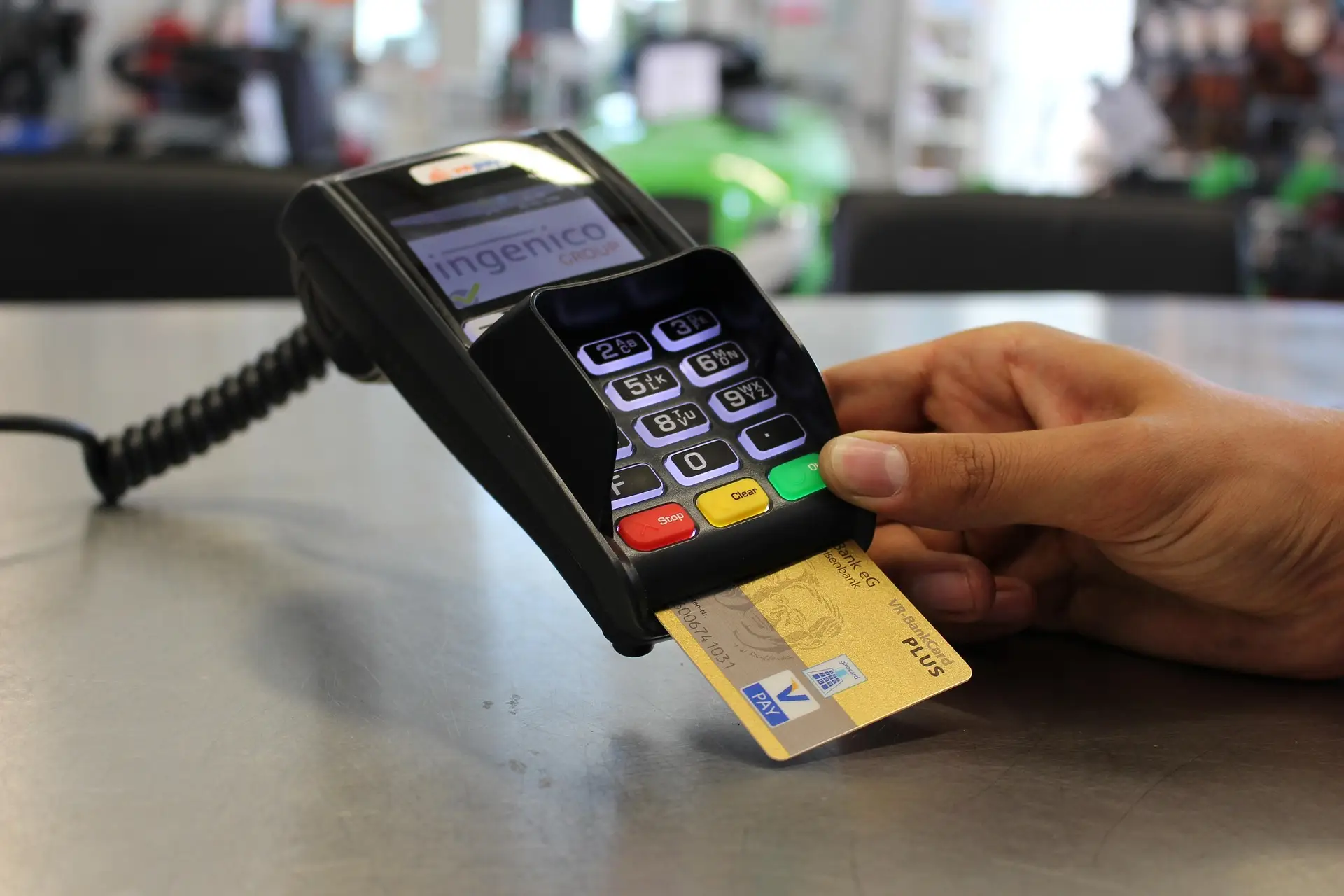
Without a suitable bank, a card is the shortest route. Once verified, you add a credit or debit card, Apple Pay or Google Pay, approve the payment in your bank's app, and the coins usually arrive within minutes. Kraken describes card deposits as "almost instant", but only offers them for euro accounts in the EEA.
The speed has a price: Mt Pelerin charges 2.5–3.8%, Relai adds 3% to its 1% service fee, and SwissBorg takes 4.5% on the top-up. Depending on your card there may be foreign-currency fees too, plus the risk that your issuer books the purchase as a cash advance. Rates, limits and pitfalls are covered in buying crypto with a credit card.
Bank transfer: SIC, instant payments and the weekend
A franc bank transfer is the cheapest route but runs to the rhythm of the payment system. A normal payment via Swiss Interbank Clearing: the Swiss banks' payment system for franc transfers, operated by SIX on behalf of the Swiss National Bank. is only processed on banking days. Kraken credits SIC payments via Bank Frick in real time, but only between 07:00 and 15:00 UTC – that is 08:00 to 16:00 Swiss time in winter and 09:00 to 17:00 in summer. Deposits are free from CHF 1. Send in the morning and you can often buy the same day. Send after your bank's cut-off or on a Friday evening and you wait until the next banking day. Public holidays push things back further.
Instant payments are meant to change this. Since August 2024 the largest Swiss banks have had to be able to receive them, and the other banks are following in stages. According to SIX, an instant payment is executed in ten seconds or less, at any hour, every day of the year. For a crypto purchase, though, your bank is only half of it: the provider's bank must take part too, and the provider must credit incoming funds straight away. We could confirm this only in exceptional cases: DFX lists SEPA Instant as a deposit route, and Pocket says it accepts instant payments only through its UK bank connection, not through its Swiss bank. If in doubt, ask the provider before counting on seconds.
SWIFT is the slowest route. SwissBorg only accepts francs via SWIFT to a French entity, and Kraken quotes 1–5 business days for SWIFT deposits. For an urgent purchase it is no use.
How the transfer works step by step, and which providers accept francs via SIC, is explained in buying crypto by bank transfer. TWINT is no shortcut: none of the exchanges or apps we checked accepts it (buying crypto with TWINT).
Cash at a machine: immediate, but expensive and capped
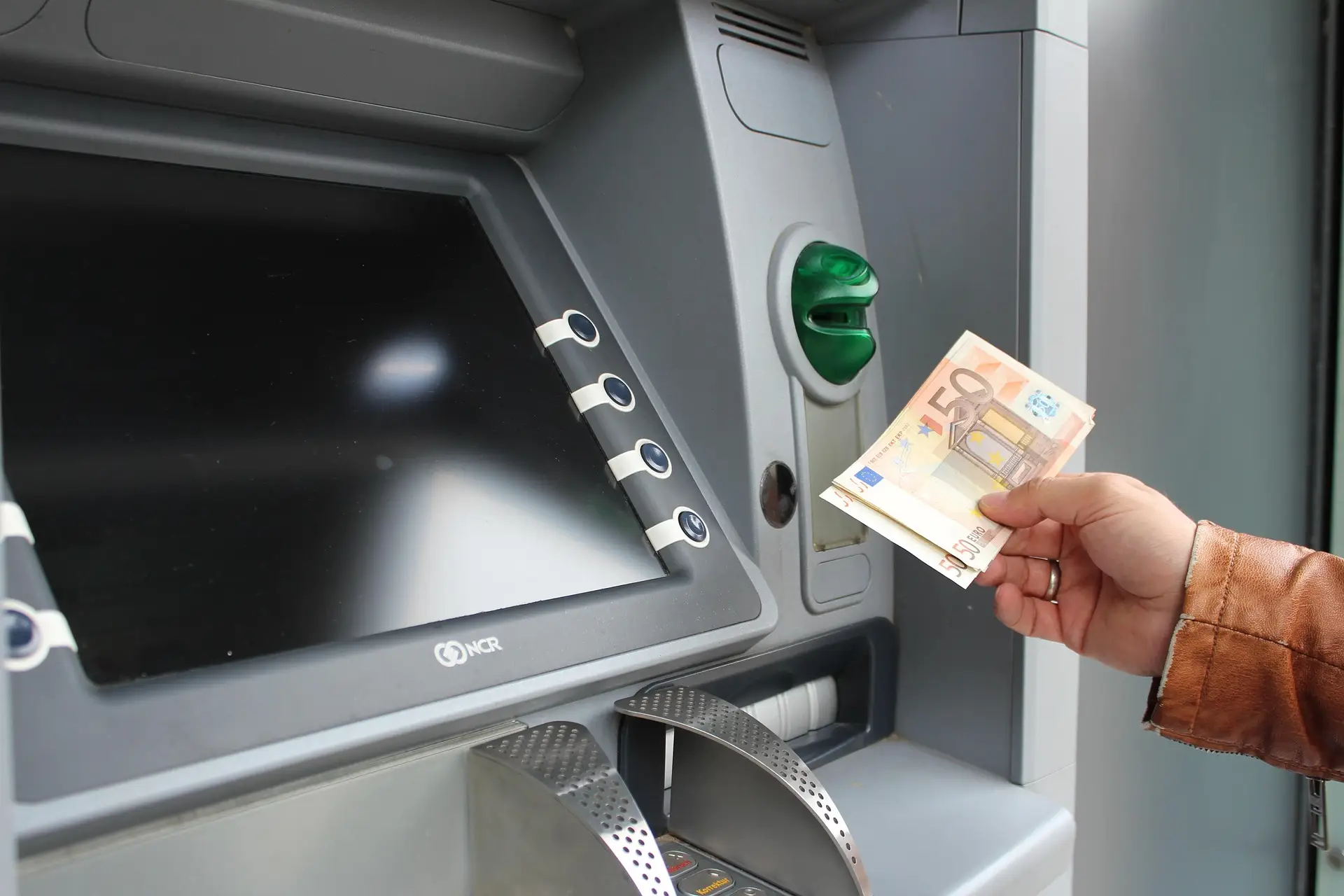
At a crypto ATM you really do hold the bitcoin straight away – as a printed A sheet of paper with a receiving address and a private key. Whoever holds the paper holds the coins.. Värdex, the largest operator with more than 80 machines, sells bitcoin and ether from CHF 50. According to its help centre, that costs a fixed CHF 4 plus an 11% commission – about CHF 26 on CHF 200. Every SBB ticket machine sells bitcoin and ether for CHF 20 to 500, paid in cash, by PostFinance Card or Maestro; the operator, SweePay, does not publish its fee.
Both routes share the same limit: without ID, no more than CHF 1,000 in cash per 30 days. Enough for a test, not for more. Locations and procedures are covered in bitcoin ATMs in Switzerland and bitcoin at SBB ticket machines. Mt Pelerin's QR-bill paid at a post office counter is not instant, by the way: coins arrive within 24 business hours. All cash routes are compared in buying bitcoin with cash.
Bought instantly is not the same as in your own wallet
If you buy bitcoin on an exchange and then want to send it to your own wallet, you need a little patience. On the Bitcoin network a new block is added roughly every ten minutes on average, and many recipients wait for several confirmations. It is faster via A second layer for bitcoin that moves payments in seconds for fractions of a cent, without recording each one on the blockchain., which Pocket, for example, supports for payouts.
Some apps skip this step altogether: Relai, Pocket and Mt Pelerin send the bitcoin straight to a wallet whose keys only you know. At Pocket this is a franc standing order converted automatically, with no minimum amount, for 1.5% (Pocket review). Relai charges 1% with a CHF 50 minimum (Relai review). For storing coins long term, see crypto wallets in Switzerland.
When someone rushes you: urgency as a red flag
One last point about speed. Many scams in Switzerland rely on time pressure: a call from your supposed bank, a "police officer" who wants to protect your savings, an online adviser promising a once-in-a-lifetime opportunity. All of them want you to buy bitcoin immediately and send it to an address they give you. Legitimate providers never do this. Whoever is rushing you wants your money. The common schemes and how to protect yourself are described in crypto scams in Switzerland.
For everyone else: buying quickly is no longer a problem in Switzerland. Once you are verified and know which payment method works at what time, your bitcoin arrives within minutes – and you only pay extra when it really is urgent. An account with SIC deposits and a franc balance, for example at Kraken, is a solid base.