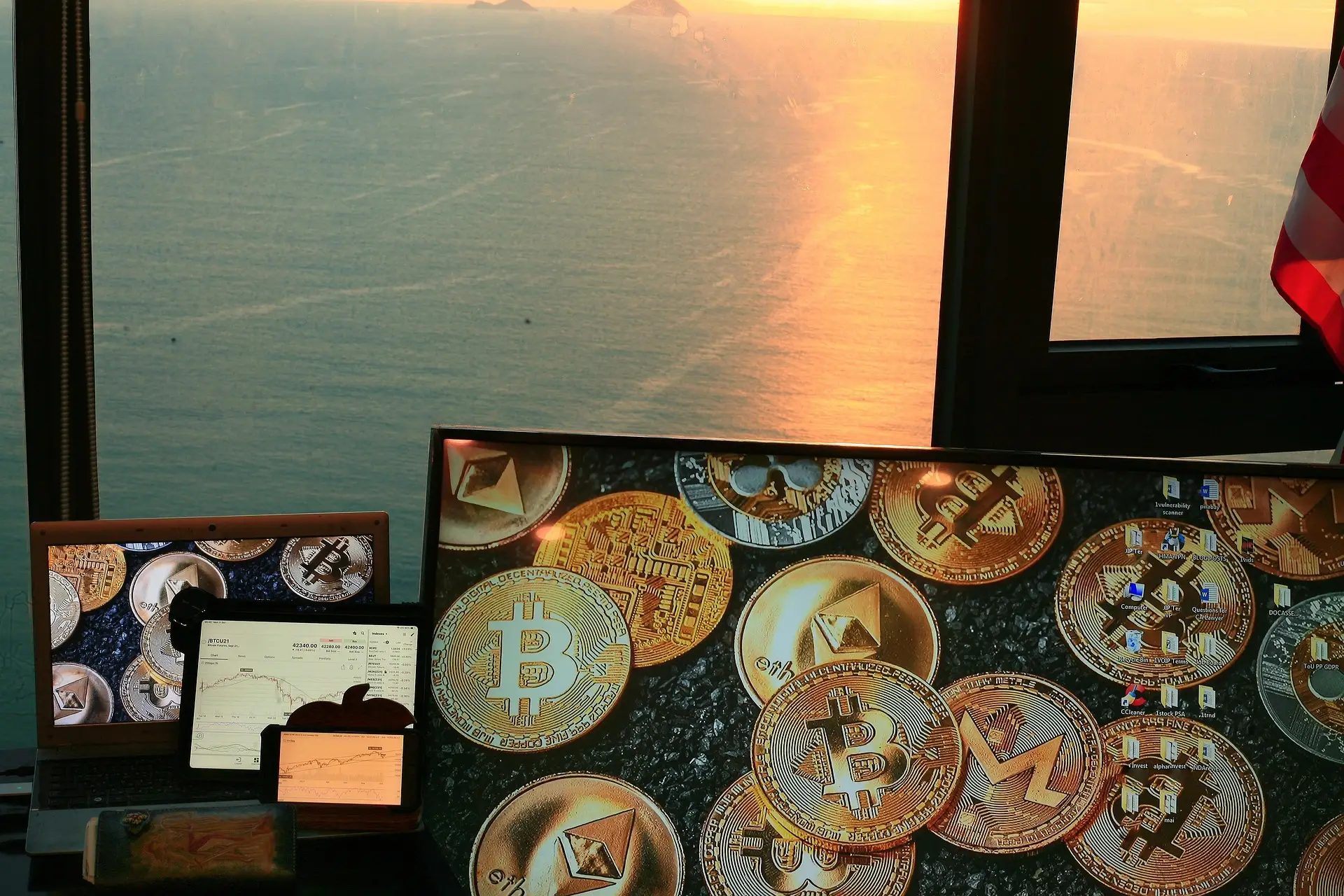
Since 21 February 2024, PostFinance customers have been able to buy cryptocurrencies directly in e-finance and the PostFinance app, around the clock. The technology behind it comes from Sygnum Bank, a crypto bank licensed by FINMA. PostFinance started with 11 coins; since February 2026 there have been 22. For many people – including plenty of expats whose first Swiss account was the yellow one – it is the obvious way in: no new account, no extra password, no transfer to an exchange.
It really is convenient. Whether it suits you depends on what you want to do. This page works through the fees, shows the process and explains the restriction you won't find in the advertising: your coins cannot leave PostFinance. We reviewed the offer using the product description and the terms of participation, plus the product page – not with an account of our own.
The offer in brief
To use it, you need a PostFinance account, tax residence in Switzerland and a Swiss ID card or passport, or a B, C or C1 permit. Short-term L permits and G cross-border permits are not on that list, and US persons are excluded. Trading is The bank only carries out the orders you give it. No advice, and no check whether the product suits you.: PostFinance doesn't advise, it carries out your orders. Support is available during the bank's opening hours.
The range covers 22 cryptocurrencies: bitcoin, ether, Aave, Cosmos, Bitcoin Cash, Compound, Chainlink, Litecoin, Polygon, Uniswap, Tezos, Avalanche, Cardano, Polkadot, XRP and Solana; February 2026 added Algorand, Arbitrum, NEAR, Stellar, Sui and the A cryptocurrency whose value is pegged to a national currency. USDC is meant to be worth one US dollar at all times. USDC. Missing: Tether (USDT), Dogecoin, Shiba Inu and Pi. For those you need an exchange – Dogecoin, for example, is available at Swissquote and Kraken.
What PostFinance crypto costs
PostFinance charges two fees, both debited from your reference account:
- Trading fee on every purchase and sale: 0.95%. From USD 250,000 it drops to 0.75%, from USD 1 million to 0.55%. The product description doesn't say whether the tiers refer to a single order or to a volume – for almost all private customers it is 0.95% either way.
- Portfolio fee of 0.15% a year on your total crypto holdings, plus VAT. From CHF 500,000 it falls to 0.10%, from CHF 1 million to 0.05%. Other investments at PostFinance are not added together for this.
Fee tiers and minimums are quoted in US dollars, while your franc account is debited. How the exchange rate is set, and whether there is an extra markup in the price, is not stated in the documents. So before your first purchase, compare the price shown with the market rate – for instance with the calculator at the top of this page.
Compared with other banks, that is cheap: Zürcher Kantonalbank charges 1.00% plus 0.50% custody a year, Luzerner Kantonalbank 1.80% up to CHF 10,000 plus 0.60% a year. Against exchanges the picture changes, mainly because of the custody fee, which crypto exchanges generally don't charge. The full bank comparison is in our guide to crypto banks in Switzerland.
How to buy crypto at PostFinance
-
Open a crypto portfolio
In e-finance or the PostFinance app, open the crypto offer, accept the terms of participation and create a crypto portfolio.
-
Pick a coin and an amount
Choose one of the 22 cryptocurrencies and enter at least the equivalent of USD 50.
-
Check the price and confirm
Check the price and fee shown. The amount is debited from your reference account and the coins appear in your crypto portfolio.
-
Optional: set up a savings plan
From USD 50 per execution, weekly, monthly, every two months or quarterly.
You don't have to send money anywhere – the biggest practical advantage over an exchange, where you first deposit francs via SIC (buying crypto by bank transfer). One detail for joint accounts sits in the terms: if the debited account requires joint signatures, this is overridden by single signature for crypto purchases, and any approval limit is ignored.
The big catch: no transfers
In the product description, a single table row says what many only notice after buying: transfer (send and receive) – “not currently available”. The terms of participation are even clearer: customers can only dispose of crypto held by PostFinance by issuing a sale order.
Legally, you don't hold coins of your own but a share of a pooled holding in The bank holds many customers' coins together; your share is recorded in the bank's books., kept by PostFinance itself or by a sub-custodian. Under the terms, you only become entitled to the coins once they have been transferred to a wallet controlled by PostFinance or the sub-custodian. That is normal for banks and has upsides: you can't lose recovery words, and your heirs will find the coins in the asset statement. If you want to control your bitcoin yourself, though, you need a different route – see our guide to crypto wallets in Switzerland.
Staking at PostFinance
Ether can be put into Coins are locked in the network to help validate transactions; in return you receive regular rewards. from 0.1 ETH. PostFinance keeps 20% of the rewards, with a minimum of USD 1 per quarter. For small holdings, that minimum can exceed a fifth of the rewards: as soon as a quarter's rewards fall below USD 5, the minimum weighs more than the percentage. PostFinance doesn't quote a yield; it depends on the Ethereum network.
Swissquote also takes 20%, but offers staking for ether, Polkadot, Solana and Cardano. In Switzerland, rewards are taxed as income. How staking works and how it is taxed is explained in our guide to crypto staking in Switzerland.
Tax: asset statements and your return
According to the product description, PostFinance sends a quarterly asset statement, and according to the product page it provides an annual asset overview for your tax return. That saves the legwork foreign exchanges leave you with, where you collect holdings and prices yourself. Your coins go into the The part of a Swiss tax return where you list securities, accounts and cryptocurrencies with their value on 31 December. and are subject to wealth tax; capital gains stay tax-free for private investors, while staking rewards count as income. What goes where is explained in our guide to declaring crypto on your tax return.
Business and joint accounts
Since May 2026, the crypto offer has also been open to companies and institutions in Switzerland: they can trade and hold the 22 coins and stake ether, likewise on an execution-only basis. At the same time, couples with a joint account can open a shared crypto portfolio; PostFinance calls this a first in its own range.
PostFinance vs Swissquote, Yuh and Kraken
Swissquote is the Swiss online bank with the widest crypto range; Yuh has been wholly owned by Swissquote since July 2025, after PostFinance sold its stake. Kraken stands for the international exchanges that accept francs via SIC.
| PostFinance | Swissquote | Yuh | Kraken | |
|---|---|---|---|---|
| Coins | 22 | 55 | 50 | 600+ trading pairs |
| Trading fee | 0.95% | 1.00% (standard) | 1% | Pro 0.40/0.80%, app 1–1.5% |
| Custody fee | 0.15% a year plus VAT | CHF 20–50 a quarter, whole account | none | none published |
| Minimum | USD 50 | not stated | CHF 10 | deposit from CHF 1 |
| To your own wallet | USD 10–15 per transfer | not confirmed | ||
| Staking | ETH, 20% | ETH, DOT, SOL, ADA, 20% | not mentioned | 30% commission, CH unconfirmed |
| Contracting entity | PostFinance Ltd | Swissquote Bank | Yuh SA, custody at Swissquote | Payward company, BVI |
At Kraken, on our reading of the terms, Swiss residents contract with a company in the British Virgin Islands; Switzerland is not named explicitly. We could not confirm whether staking is available to Swiss residents. More in our reviews of Swissquote, Yuh and Kraken.
Pros and cons in concrete terms
What works
- Buy directly in e-finance and the app, with no transfer to an exchange
- 0.95% trading fee – lower than ZKB (1.00%) or LUKB (1.80% up to CHF 10,000)
- 22 coins, including bitcoin, ether, XRP, Solana, Cardano and USDC
- Ether staking from 0.1 ETH for 20% of rewards
- Savings plan from USD 50, weekly to quarterly
- Annual asset overview for your tax return
Watch out for
- No transfers: coins can't be sent to your own wallet or moved in
- Custody fee of 0.15% a year plus VAT – Yuh charges none
- Minimum order USD 50, versus CHF 10 at Yuh
- No USDT, Dogecoin or Pi
- Swiss tax residence and a Swiss ID or B, C or C1 permit required
- Fee tiers in US dollars, exchange rate not shown separately
PostFinance Pay, PostFinance Card and TWINT
Your PostFinance account can also fund purchases elsewhere. According to payment provider wallee, PostFinance Pay has been available on Bitpanda for francs since February 2025 – a way to fund the platform without a classic bank transfer (Bitpanda review). With a PostFinance Card you can buy bitcoin or ether as a paper wallet at any SBB ticket machine, for CHF 20 to 500 (bitcoin at SBB ticket machines).
TWINT, on the other hand, won't help: neither PostFinance nor any exchange we checked accepts TWINT for crypto purchases. P2P marketplaces and vouchers are explained in buying crypto with TWINT. And if you'd rather hold a security than coins: SIX-listed crypto ETPs can be bought via PostFinance e-trading – see our guide to crypto ETPs in Switzerland.
Who PostFinance crypto suits
PostFinance makes sense if you are already a customer, want to hold a few hundred to a few thousand francs in bitcoin or ether, and value a Swiss institution, the tax overview and having no wallet technology to deal with more than shaving off the last fraction of a percent. For a monthly savings plan from USD 50, the offer is solid.
It doesn't suit you if you want to hold bitcoin yourself, pay with it or move it to another provider later. Nor if you're after USDT, Dogecoin or Pi, plan to hold larger amounts for years – the custody fee recurs every year – or live here on a permit that isn't on PostFinance's list. In those cases an exchange is the better fit.
Want to send bitcoin to your own wallet, or buy coins PostFinance doesn't list? An exchange account takes only a few minutes to open.
Operating since 2013Group registered with FinCEN (US) and the FCA (UK)